Memex
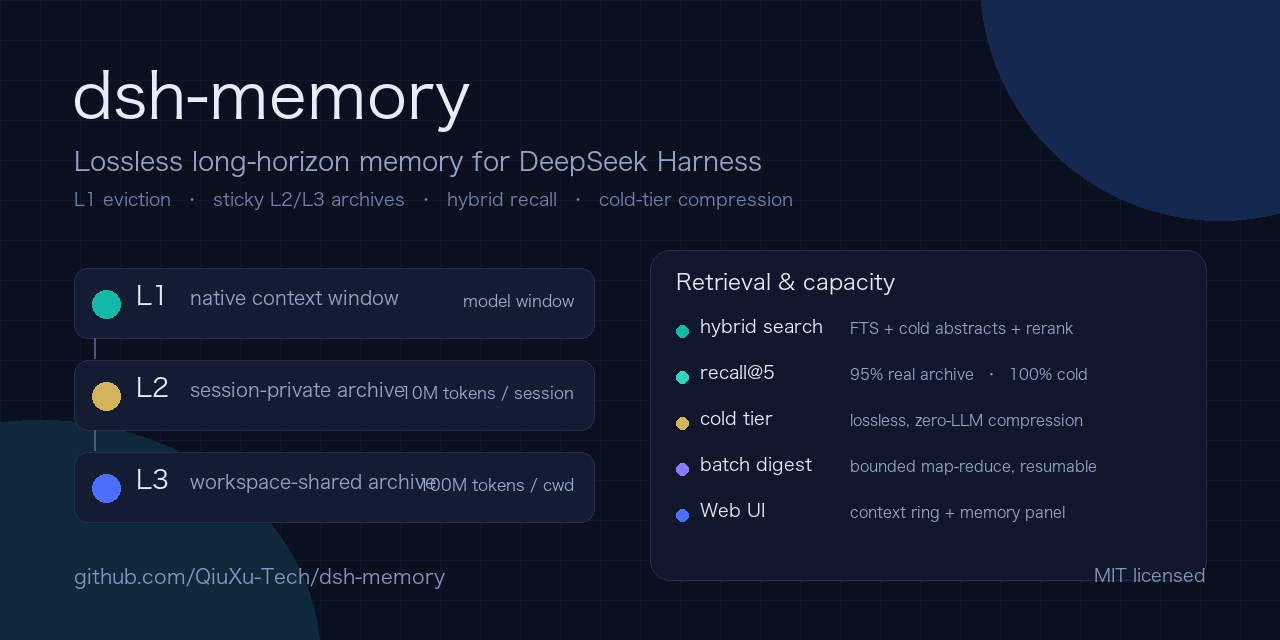
The extra-context layer for AI agents — L1 eviction, sticky L2/L3 context pools, context paging, cold-tier compression.
One-issue alternate-model agent instrumentation registration
Registered before these calls and after observing earlier batches. This separate, small instrumentation check uses Lodash #5881, which appeared in prior registrations but was not attempted after those batches stopped. Its pinned source and acceptance/reference checks are the same as the Lodash search-repair registration. The manifest has SHA-256 894b0998ac0163528506f2070ce56d6ea068e2c02864957f5d4bd0e5cf0c34fc.
The two paired, randomized arms use the same isolated tools and issue but a different solver, gpt-6-astra, to check whether the earlier model’s incomplete work reflected a tool/model interaction. This is not a randomized comparison between models: the choice followed earlier results and the task differs. The pre-seeded keyword and Memex pager contexts, 16-turn tool budget, at most four tool calls per turn, frozen issue-specific check and custom regression controls are otherwise as in the preceding Lodash batch. If the tool budget is exhausted, the runner asks for a final answer in at most two sentences and permits up to 1,200 output tokens; incomplete or truncated replies remain visible.
Blind AI reviewers are deepseek-flash and claude-haiku-4-5; disagreements between valid ratings are reviewed by gpt-6-astra, the solver family, so adjudication is not independent human review. Stage-level stopping, no automatic retry and accounting rules are unchanged. The batch target is under $1 and is not a hard cap; failed calls and missing usage or fees remain UNKNOWN. A single public issue, with potential exposure to its discussion and public PRs, cannot establish production correctness, cost savings, or autonomous memory management.