Memex
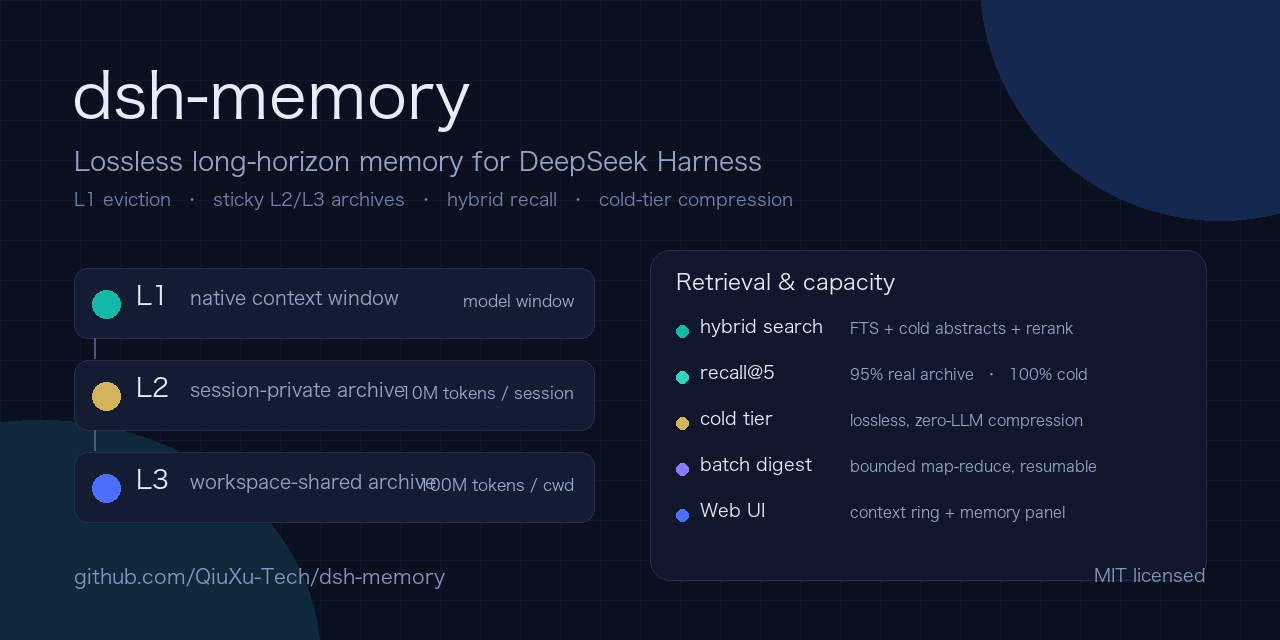
The extra-context layer for AI agents — L1 eviction, sticky L2/L3 context pools, context paging, cold-tier compression.
Two-issue search repair follow-up registration
Registered before this follow-up’s solver calls and after observing a failure in the prior batch. In the previous Lodash batch, one attempt completed without changing code and a second was interrupted in flight when the worker was found to skip source files over 300,000 bytes. That excluded the 545,953-byte lodash.js from repository search. The interruption was an additional, post-observation stop to prevent spending on an impaired tool. All 26 started requests, 25 completed responses, the unresolved in-flight request and both partial workspaces remain recorded; four later assignments were not launched. No in-flight request is retried automatically and its charge is UNKNOWN unless matched to billing.
The new worker permits searching files up to 1.5 MB, the same maximum as its bounded file reader. A VM test exercises a 350 KB source file, and read-only checks against the pinned Lodash checkout locate both baseAssignValue and baseInverter in lodash.js. The worker continues to deny arbitrary shell/network access, hidden checks and edits to upstream tests. Targeted checks do not certify the isolation boundary.
This follow-up covers the two not-yet-attempted issues from the interrupted registration, #5750 and #5881. The previously attempted #6195 is not rerun. The frozen manifest has SHA-256 4ed29788af17733c92095975ba6c92d34253c82bf677bebe29a09e34336d44c7; it fixes fresh paired randomization, captured issue text and discussion, checks and worker hashes before these calls. Their original source failed the acceptance checks; reference modifications and both sets of hand-written regression controls passed. These are not the full upstream suite or maintainer acceptance.
Arms, 16-turn limit, at most four tool calls per turn, one tool-free final response after the limit, AI blind review, disagreement adjudication, stopping and no-retry rules are otherwise as stated in the preceding registration. This two-issue follow-up was selected after an observed execution defect, uses public discussions and possible solution leakage, and is neither an independently selected 30–50-task cohort nor evidence of production improvement or memory autonomy. Its outcome will remain separate from the interrupted batch.