Memex
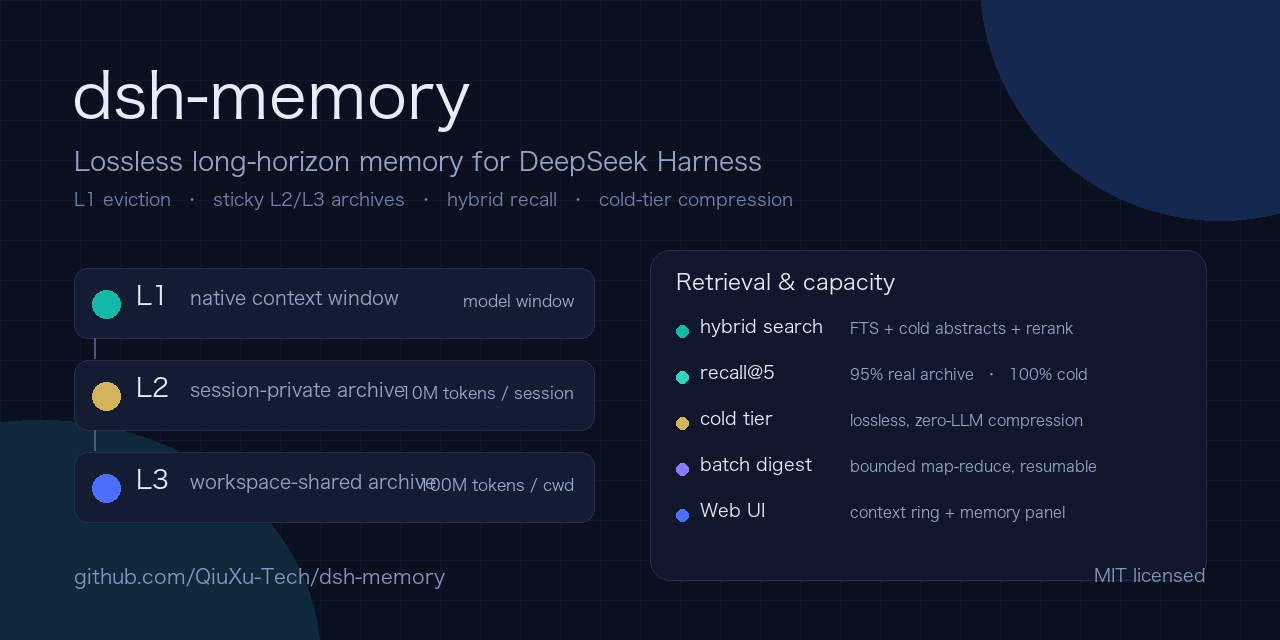
The extra-context layer for AI agents — L1 eviction, sticky L2/L3 context pools, context paging, cold-tier compression.
SQLite and file consistency
The SQLite consistency fix after v0.14.1 serializes file-backed mutations with SQLite’s writer lock and a five-second busy timeout. A write, cold archive or restore installs a separate file before committing the index change; deletion keeps the old file until its index change commits. A per-operation manifest lets the next writer or a reopened store finish cleanup or roll back an interrupted operation according to the committed SQLite path. Existing files are never replaced merely because a move failed.
If an uncommitted write has staged a new body, recovery retains that file under
the store’s .file-recovery/ directory. If an old file changed externally
before cleanup, it is retained there too. Those files may contain private
memory data; backups include them. Record paths can change after an update, so
use the path returned by the store instead of assuming that a previous path
remains current.
A failed write reports its record ID on the error and in the error message. If commit acknowledgement was lost, inspect that ID before retrying a write with an automatically generated ID.
For a legacy store already affected by the earlier bug, a missing indexed body is reported as an error. The store does not guess whether a file in the other tier is the correct recovery candidate and does not overwrite it. Preserve the database, WAL/SHM files and record directories before inspecting such a case.
Backup holds the SQLite writer lock while it reconciles pending operations, snapshots the database and copies files. Restore checks the manifest and paths before touching the destination, then rebases indexed paths to the restored root. These guarantees cover cooperating versions of this store; external programs modifying files without the lock can still create conflicts.
The recovery tests kill processes at file and commit boundaries and verify reopening and concurrent operations. They do not establish durability against sudden power loss or storage hardware failure; the store does not fsync every file and directory as part of this protocol.