Memex
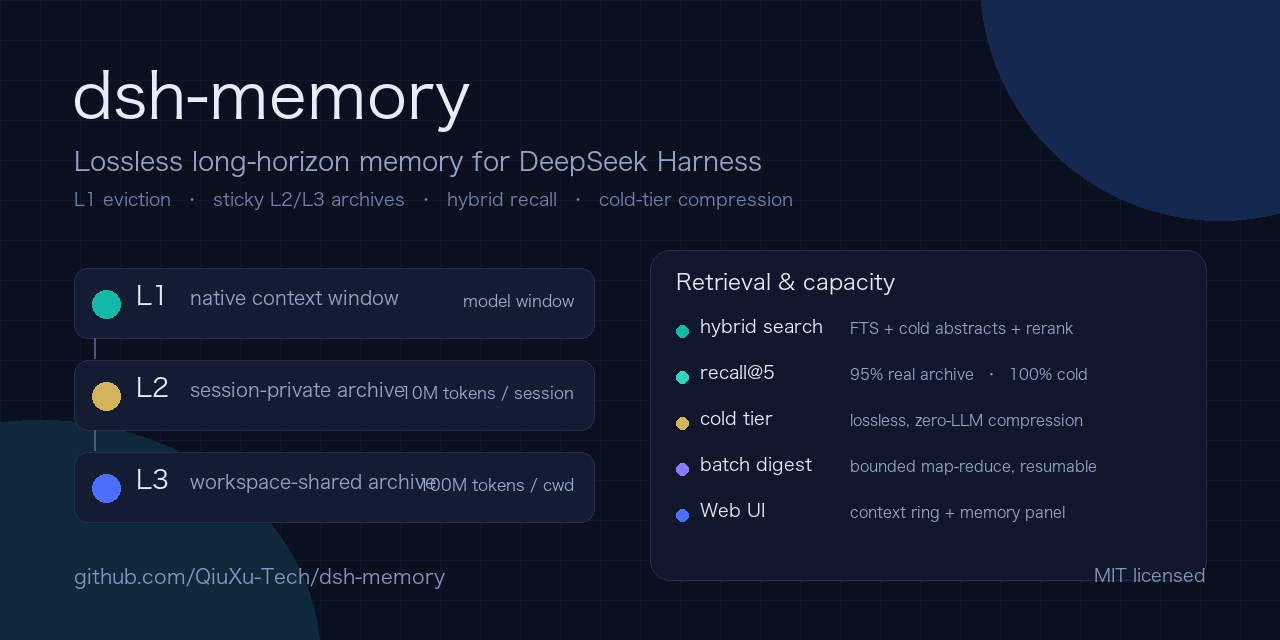
The extra-context layer for AI agents — L1 eviction, sticky L2/L3 context pools, context paging, cold-tier compression.
Three further Prettier idempotency checks
Registered before these task calls and after prior results and reference patches were inspected. The three issues were open with complete discussion snapshots at selection. This is another separate instrumentation batch, not a pre-registered 30–50-task cohort. The manifest has SHA-256 62853b4fa768341c33560396ff85bf6deeac251fa09914acc917ed444921dfa6 and fixes task snapshots, scripts, checks and paired order.
| Issue | Frozen issue check | Positive reference |
|---|---|---|
| Prettier #12649 | The reported MDX inline-tag example is idempotent, retains both named tags and preserves the normalized parsed tree. | Source hunks of closed, unmerged PR #20255, head 6888113e99f76cbbda494215570f0bab727718a7 |
| Prettier #10851 | The reported TypeScript example is idempotent, retains its type-checking comment marker and preserves the normalized Babel program. | Source hunks of closed, unmerged PR #19882, head 23c7bcfc3d75dd6da155a1bfad77657a601a0155 |
| Prettier #18080 | The reported JavaScript example is idempotent and preserves the normalized Babel program. | Source hunks of PR #20320, head b868f66488e6ad3702f682d63f3eca8763a655da |
On pinned Prettier commit bed4edbb1cf2a9db4004215b0ce5707cdb02b5d9, each frozen issue and public check fails while its corresponding source-only reference passes; two small ordinary-formatting regression controls pass on baseline and reference. These are narrow examples, not complete project acceptance. The normalized tree checks omit locations, raw formatting and comment attachment. In particular, merely retaining @ts-expect-error does not prove that its attachment or type-checking effect is preserved.
The #18080 example becomes stable under the same reference patch used for #20307 in the preceding batch; these issues can share a cause and must not be treated as independent evidence. Existing public PRs and issue discussions can expose proposed solutions. The isolated tools, source, paired randomization, solver, 12-turn cap, explicit AI rubric, reviewers, solver-family adjudicator and stop rules follow the earlier Prettier protocol. The estimated batch target is below $1.50 rather than a hard cap. Failed or missing calls, scores and fees remain visible; no production correctness, savings or autonomous memory-management claim follows.